- Data-driven farming is reshaping Kenya’s food security landscape.
- Precision soil intelligence empowers smallholder farmers with actionable insights.
- Technological advancements are democratizing access to farming tools for remote farmers.
- Collaboration with government and international bodies is critical for widespread implementation.
- AI is enabling hyper-localized advice, improving farm management and productivity.
- Investment in AI and agriculture technology is imperative for future resilience.
In a rapidly changing world where technology is unfalteringly advancing agriculture, Kenya is leading the charge in Africa as data-driven methods shape a new dawn in food security. The East African nation, rich in agricultural heritage but challenged by sustainability issues, is now experiencing a revolutionary shift through technological interventions that are geared towards increasing agricultural productivity and resilience.
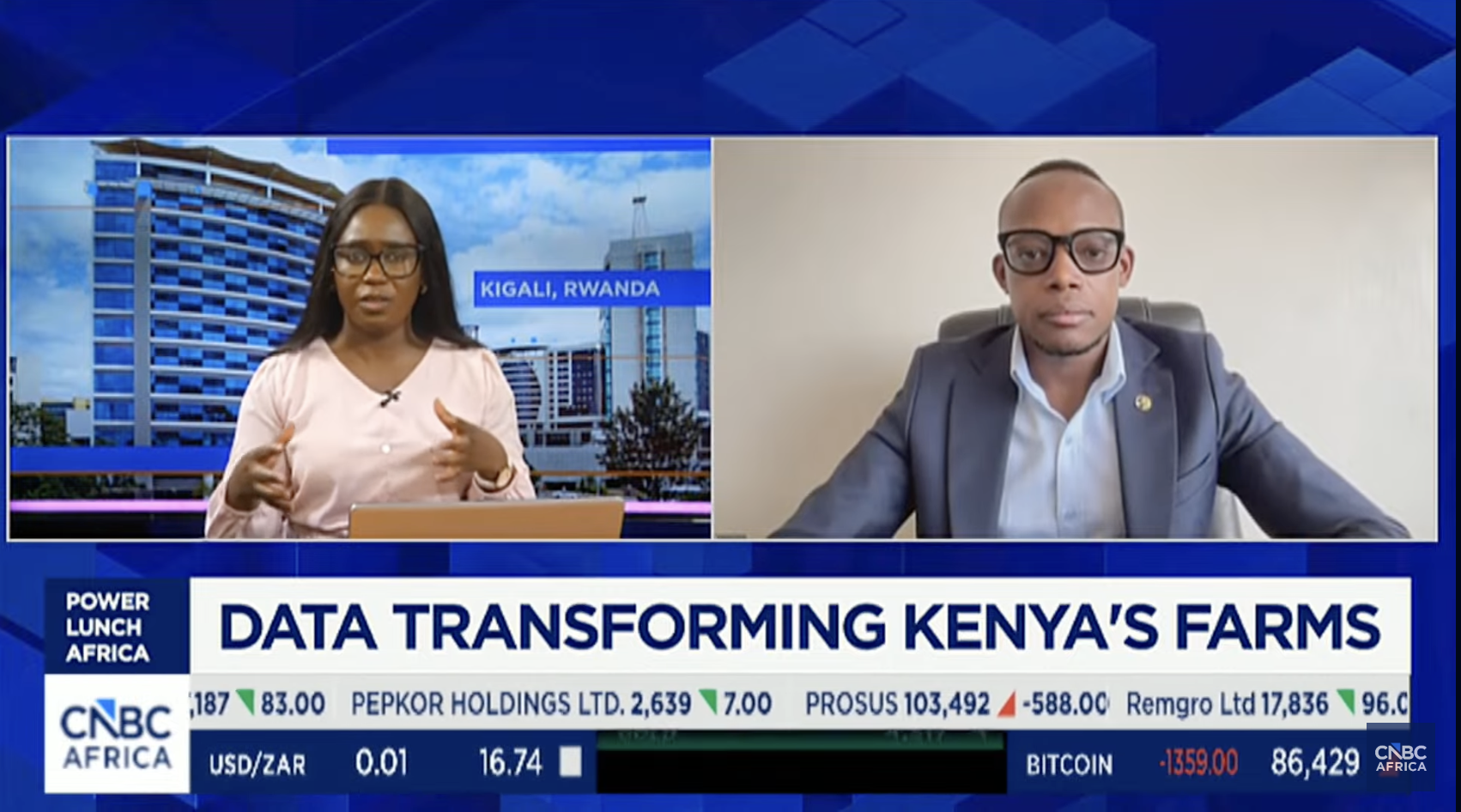
Speaking to CNBC Africa, Brian Bosire, CEO of UjuziKilimo, a pioneering tech company at the forefront of this transformation, detailed how real-time soil diagnostics and AI-driven farming are altering the agricultural landscape for smallholder farmers. ‘Data is becoming as critical to agriculture as any other resource such as land and water. And from what we have been seeing, Africa’s challenge is not just about production volumes, but more about food productivity, predictability, and also resilience of the food systems,’ Bosire explained.
The core of this transformation rests heavily upon precision soil intelligence, which empowers farmers to apply inputs such as fertilizer more efficiently and decide what crops to plant and when, based on soil condition data. Traditionally, such technology was limited to larger, well-funded farms, but advancements are democratizing access, allowing even remote, smallholder farmers to utilize these tools.
The implications of such soil diagnostics span beyond immediate farming practices. Bosire highlighted that with the arrival of these technologies into village settings, farmers can now access tailored advice and support right at their fingertips. Such access is essential in steering away from historical bottlenecks—like delayed lab diagnostics, which were accessible mainly in urban areas—to a more streamlined, localized help that improves decision-making and boosts efficiency.
Government support is crucial in maximizing the reach of these technological advancements, and collaboration between UjuziKilimo and governmental bodies has been a testament to this. The company has deployed a team of field agents across the country, making soil intelligence services more accessible. Furthermore, these partnerships extend to international organizations, echoing a broader commitment to not just a national, but a continental agricultural evolution.
The advent of AI in this industry is poised to revolutionize practices further. ‘AI is going to be one of the biggest enablers for Africa to leapfrog into the next era of farming,’ Bosire enthused. He pointed out that AI’s capabilities allow for hyper-localized advisory services, climate change mitigation strategies, and better farm management practices, all crucial for enhancing productivity and sustainability.
Investment in AI and related technological innovations is critical as Africa stands at a pivotal moment. The continent must invest more aggressively into emerging AI applications that range from soil intelligence and disease detection to climate solutions, ensuring agriculture not only survives but thrives under changing global conditions.
In conclusion, as Kenya cultivates a data-centric approach to agriculture, the broader African landscape looks set to follow suit. The vision of a technology-enabled agricultural sector is not just about feeding nations but creating resilient, sustainable food systems that leverage the power of innovation for the prosperity of the continent’s millions of farmers and their families.
Ultimately, as investment in agricultural technology grows, so does the potential for Africa to redefine its food security metrics, setting new benchmarks for productivity and sustainability that could, in time, become a global model.